
Crown and bridge insurance verification requires more than a major-services percentage. The same plan may apply replacement limits, material-based payment provisions, tooth-specific history requirements, and an annual maximum that changes before treatment is completed. A useful breakdown connects each planned component to its own benefit conditions. It also distinguishes the clinician's treatment recommendation from the payer's reimbursement decision. This guide gives treatment coordinators and billing teams a practical sequence for reviewing restorative benefits, collecting missing history, and presenting an estimate patients can understand. If your practice needs help collecting these details, our crown and bridge verification service outlines the relevant workflow. The steps below apply as questions to investigate, not as universal rules imposed by every insurer.
Define exactly what is being planned
Begin with the clinician's proposed treatment and the relevant tooth numbers. Determine whether the case involves an initial crown, replacement crown, fixed bridge, repair, or another restorative service. A request labeled major work may conceal several procedures with different benefit treatment. Ask the clinical team to resolve ambiguity before calling the carrier.
Identify associated services separately where clinically applicable. A core buildup, post, provisional restoration, or related endodontic care may have its own reporting and benefit questions. Do not assume the crown benefit includes every component, or that every component will be payable separately. The clinical record determines what was done; plan provisions determine benefits.
Create one verification line for each proposed service. Include the tooth or site, fee basis, benefit category, known restriction, and unresolved question. This makes the eventual estimate easier to explain and prevents a favorable answer about one crown from being applied to the entire treatment plan.
Verify the exact provider and plan
Confirm patient eligibility for the anticipated service date and the applicable group or product. Then check the rendering dentist, billing entity, and treatment location within that network. A carrier's familiar name does not establish that the particular restorative case uses the practice's usual contracted allowance.
Ask about waiting periods and any required referral or authorization process. If the patient recently enrolled, document the effective date and the specific condition affecting major restorative services. Do not assume that active preventive benefits mean crowns or bridges are immediately eligible for payment under the same terms.
For broader consumer context, Delta Dental's crown cost and insurance guide explains that individual benefits affect the financial picture. The office's job is to replace general expectations with the actual plan information, current provider status, and procedure details for this patient.
Investigate replacement history
For a replacement restoration, obtain the original placement date when available and ask the payer how the replacement interval is measured. Request the exact period and relevant exceptions rather than inserting a familiar number from another plan. A five-year assumption, for example, should never become a verified fact without evidence.
Compare carrier history with the patient's account and prior clinical records. A patient may remember the year but not the month, or may describe a repair as a replacement. Record the source and confidence of each date. If documentation is missing, give the collection task an owner instead of quietly treating the requirement as satisfied.
Ask what documentation the payer needs when replacement is requested before a usual interval. The clinician must describe the actual condition and rationale accurately. Verification staff should not invent a fracture, recurrent decay, or other finding to fit a benefit exception. Uncertainty belongs in the record until the facts are established.
Check alternate-benefit and material provisions
An alternate-benefit provision can change the amount used to calculate payment even when the reported procedure accurately describes the care. For restorative treatment, ask whether the planned material or service triggers a different benefit basis and whether that determination depends on tooth location or other conditions.
The ADA discussion of noncovered services distinguishes exclusions from payment edits such as alternate benefits. This matters because a reduced payment is not automatically the same as a completely excluded service. The distinction can also affect how staff explain adjustments and patient charges.
Record the reported service and the payer's proposed benefit basis separately. Do not change the clinical coding solely to match the insurer's cheaper alternative. Ask the billing lead to review any uncertainty about what may be collected from the patient under the provider contract and applicable rules. An alternate allowance alone does not settle that question.
Ask bridge-specific questions
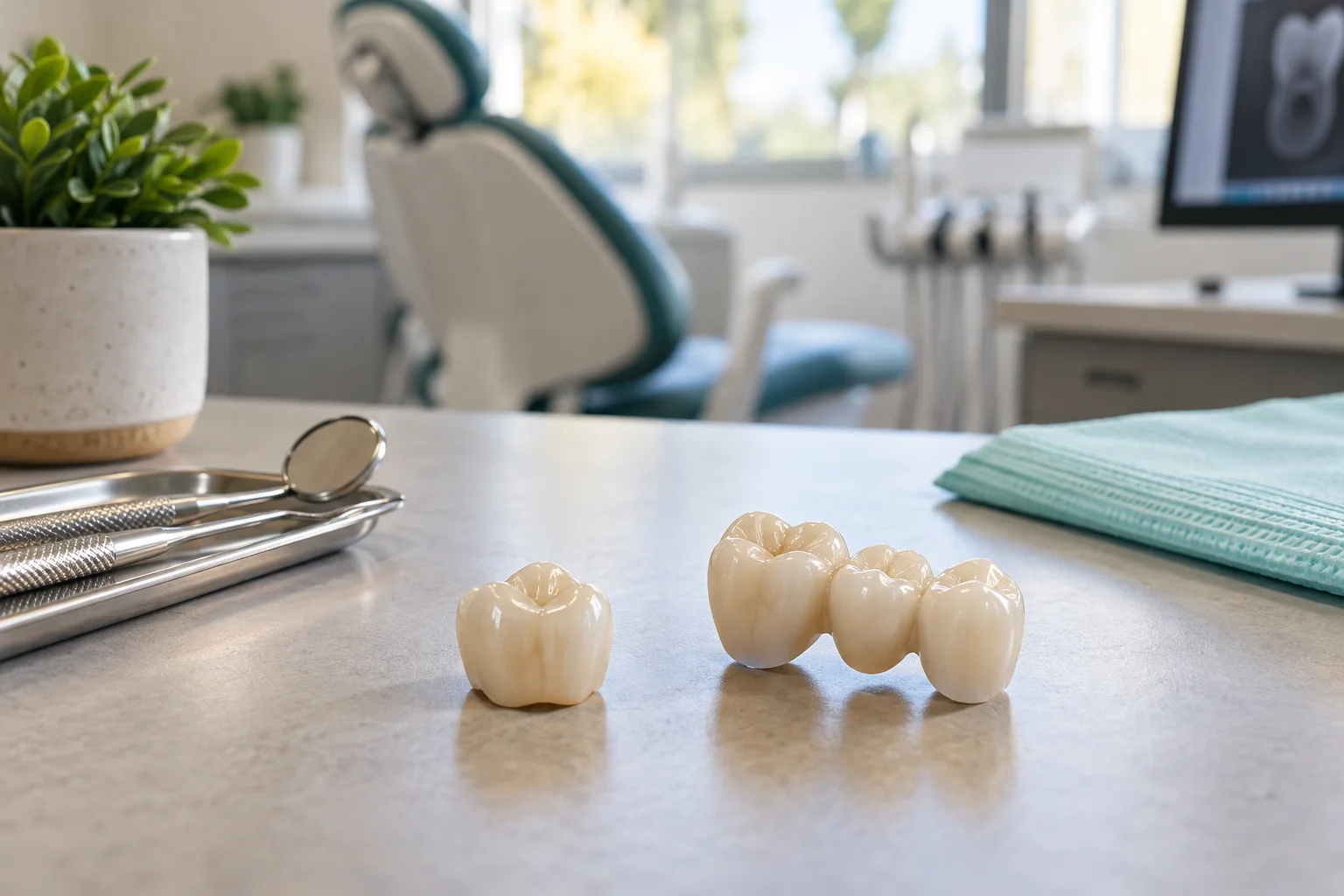
For a bridge, identify the missing tooth or teeth and the planned supporting components. Ask whether any missing-tooth provision applies to the patient's contract and circumstances. Its applicability can depend on plan terms and governing rules, so avoid describing it as a universal exclusion.
Collect the relevant extraction or tooth-loss history through appropriate records. A vague statement that the tooth was missing before coverage is not always enough to evaluate a plan provision. If the carrier relies on that history, ask for the exact wording and what evidence it needs. Document any conflict between the response and available records.
Also ask whether a proposed repair, replacement, or extension is evaluated differently from a new bridge. Keep the answers tied to the specific plan and component. For a patient considering different clinician-recommended options, our implant benefit verification guide explains the separate questions needed for implant-supported care.
Request the right supporting documents
Determine which existing clinical records the payer needs for advance review or claim adjudication. Depending on the service and circumstances, the request may involve diagnostic images, a narrative, prior placement information, or other documentation. Record the requirement and assign collection to the appropriate clinical team member.
Use ADA coding education as a reference for accurate reporting questions. The practice should report the actual procedure using current guidance and obtain clarification where needed. Benefit verification does not authorize administrative staff to reinterpret a clinical record or choose a code based on reimbursement.
Check attachments for patient identity, date, tooth information, and readability before transmission. Avoid sending unrelated records simply because they are available. A complete, focused submission is easier for the payer and your billing team to follow than a large collection of documents with no explanation of relevance.
Decide whether advance review is useful or required
Ask whether the plan requires authorization or offers a voluntary predetermination for the proposed work. Record the answer and the expected submission process. For a complex restorative case, an advance response can clarify the payer's interpretation, but it should not be described as an unconditional payment guarantee.
Our predetermination versus preauthorization guide explains how to separate those processes. Read each response for the exact services reviewed, conditions, validity dates, and remaining-benefit assumptions. A letter concerning one tooth may not establish benefits for a later expanded bridge plan.
Track the request until someone interprets and communicates the result. If the payer asks for more information, record the missing item and responsible person. If the treatment plan changes, investigate whether another submission is necessary. The administrative goal is a usable answer for the actual planned treatment.
Build the estimate line by line
Start with the applicable allowance and benefit basis for each procedure. Apply the verified deductible, percentage or scheduled benefit, annual maximum, and any specific restrictions. Keep contractual adjustments distinct from patient responsibility. The annual maximum guide provides a worked example of why the headline percentage can be misleading.
For an illustrative case, imagine a crown and buildup with separate office fees. The plan may report a benefit for the crown while applying a separate review or payment rule to the buildup. Presenting both as one amount covered at half the fee would hide that uncertainty. A line-by-line estimate makes it visible and easier to update.
Check pending claims from the practice and other providers. If treatment includes stages across benefit periods, confirm how the payer assigns the service to a period and report dates accurately. Never change a service date to make benefits appear available. Clinically appropriate scheduling and truthful reporting must guide the final plan.
Explain the result before treatment
Patients often hear crown coverage and assume the insurer will pay the stated percentage of whatever the dentist charges. Explain the allowance, any alternate-benefit effect, the available maximum, and the estimate's unresolved items. Focus on the few provisions that materially affect this case rather than reciting every clause in the policy.
If replacement history is missing, say so plainly and describe the action underway. If the plan estimates a lower benefit based on another material, explain that this is its payment calculation and does not by itself change the clinician's recommendation. Give the patient room to discuss clinically appropriate choices with the dentist.
Keep the written estimate aligned with the conversation. Record when the estimate was prepared, what information it used, and why a later revision occurred. Consistent communication reduces the chance that the billing team inherits a promise the verification record never supported.
Close the loop after the claim
Compare actual adjudication with the verified facts and advance response. Classify discrepancies: replacement interval, missing history, alternate benefit, annual limit, documentation, or processing error. Different causes require different next steps. Repeated submission without identifying the cause can waste time and complicate the account history.
Where a correction or appeal is appropriate, use accurate supporting evidence and follow the payer's stated process. Where the outcome reflects a valid plan provision, reconcile contractual adjustments and patient responsibility before issuing a revised statement. Retain the relevant documents so staff can explain the result consistently.
Review recurring issues in team training. If buildup assumptions frequently cause estimate changes, add a dedicated question. If prior placement dates are repeatedly missing, improve intake for replacement cases. A focused feedback loop keeps the verification checklist useful without turning every crown into an unnecessarily long investigation.
Key Takeaways
- Verify each restorative component and its benefit conditions separately.
- Document replacement history and alternate-benefit provisions.
- Use accurate clinical reporting and explain the estimate's assumptions.
Detailed restorative verification helps your team discuss costs with better information. Learn about Eagle's crown and bridge support, or contact us to review the handoff between treatment planning, verification, and billing.
Written by the Eagle Insurance Verification Team
Practical administrative guidance based on the sources linked in this article. Benefits depend on the patient's current plan, provider contract, and claim review.
Related articles

Dental Implant Insurance Verification: A Component-by-Component Guide
A practical dental implant insurance verification guide covering components, exclusions, missing-tooth provisions, staged treatment, and estimates.
Read article
Periodontal Insurance Verification: SRP and Maintenance Benefits
Verify periodontal insurance benefits for scaling and root planing and maintenance, including history, quadrants, frequency, and documentation.
Read article
Orthodontic Insurance Verification: Lifetime Maximums and Payments
Verify orthodontic insurance benefits, remaining lifetime maximums, age rules, installment payments, and treatment-in-progress provisions.
Read articleReady to improve your practice?
Let us handle your insurance verification so you can focus on what matters most — patient care.